

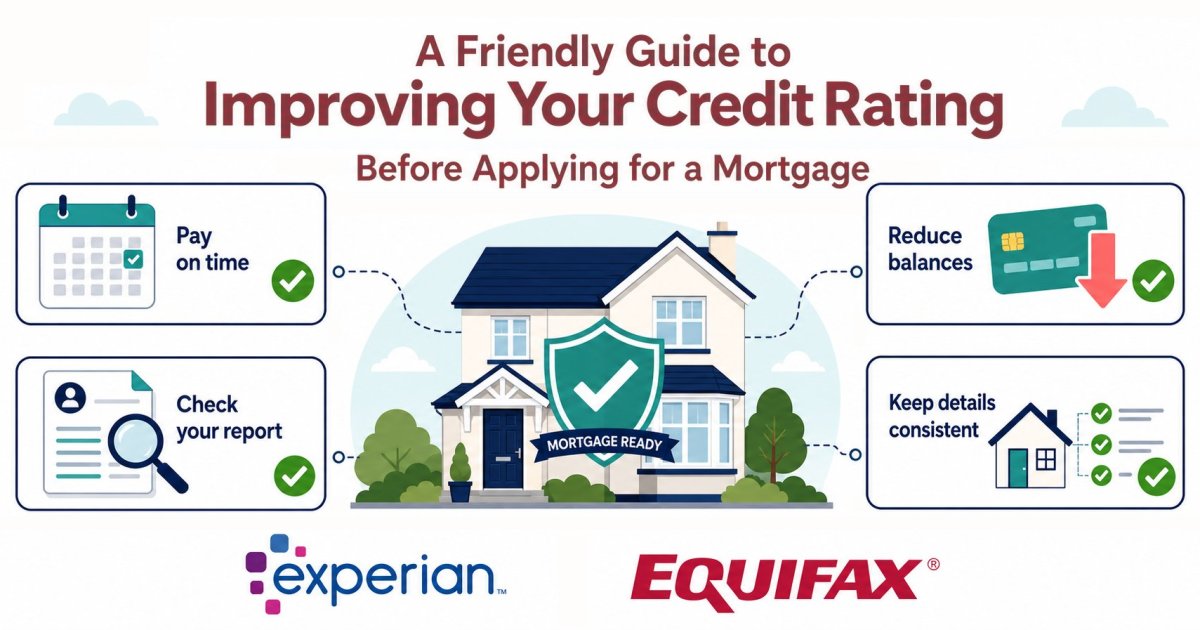
A Friendly Guide to Improving Your Credit Rating Before Applying for a Mortgage
Thursday 6 August, 2026
Whether you’re planning for a new mortgage to buy your first home, or you’re preparing for a remortgage, your credit profile can play an important part in the mortgage process. The good news is that improving your credit position is often about making small, consistent changes over time rather than taking dramatic action.
At Lonsdale, we regularly speak to people who are worried that having a credit card, student loan or Buy Now Pay Later agreement may stop them getting a mortgage. In many cases, these types of borrowing are completely manageable and do not automatically prevent you from securing a mortgage. What matters most is how they are managed and whether the borrowing remains affordable alongside your other commitments.
Mortgage lenders are required by the Financial Conduct Authority (FCA) to carry out affordability checks and assess whether a mortgage is suitable and sustainable for the applicant. This means lenders will usually review your income, spending, credit commitments and repayment history before making a decision.
Hayley Croft, Lonsdale Mortgage Broker, Lichfield, Staffordshire said:
“A mortgage application is not simply about having perfect credit. Lenders are looking for responsible financial behaviour and affordability. Even if someone has had credit commitments in the past, there are often practical steps that can improve their position before applying.”
Improving Your Credit Rating for a First Time Buyer Mortgage or Remortgage
If you are thinking about applying for a mortgage within the next six to twelve months, it can be worthwhile reviewing your financial position early. Mortgage lenders will usually look for evidence that you can manage credit responsibly and maintain repayments on time.
Simple actions such as keeping up with monthly payments, reducing unnecessary borrowing and checking your credit file for errors can all help strengthen a mortgage application.
A stronger credit profile may also improve the range of mortgage products potentially available to you.
Why Your Credit File Matters for Mortgage Applications
Your credit report gives lenders an overview of your borrowing history and financial commitments. This can include mortgages, loans, credit cards, mobile phone contracts and some Buy Now Pay Later agreements.
Lenders may use information from some credit reference agencies when assessing mortgage affordability and overall lending risk.
Mortgage lenders are not simply looking for whether somebody has borrowed money before. In many cases, they are looking for evidence that borrowing has been managed sensibly and repayments have been maintained consistently.
Buy Now Pay Later (BNPL) and Mortgage Applications
Buy Now Pay Later services have become increasingly common in the UK, particularly for online shopping and retail purchases. Although many people use these products responsibly, lenders may still consider them during affordability assessments.
Some BNPL agreements are now beginning to appear more consistently on credit reports, and FCA regulation of BNPL products is continuing to develop. This means lenders may have greater visibility of these commitments in future mortgage applications.
Having BNPL borrowing does not automatically prevent somebody from getting a mortgage. However, multiple active agreements or missed payments could potentially raise concerns around affordability or financial pressure.
How to Reduce the Impact of BNPL Before Applying for a Mortgage
- Avoid taking out multiple BNPL agreements shortly before a mortgage application
- Keep repayments up to date and avoid missed instalments
- Consider clearing smaller balances where possible
- Review your credit report to ensure information is accurate
- Avoid relying on BNPL for everyday essential spending if possible
For many people, sensible use of BNPL is manageable. The key is showing that borrowing remains controlled and affordable.
Student Loans and Mortgage Affordability
Student loans are treated differently from many other forms of borrowing. In most cases, the size of the outstanding student loan balance itself is not the main issue for mortgage lenders.
Instead, lenders will usually focus on the monthly repayment amount and how this affects overall affordability calculations.
Because student loan repayments are linked to income, many lenders view them differently from unsecured borrowing such as personal loans or credit cards. Having a student loan does not automatically damage your credit score.
However, the repayments can still reduce the amount some lenders may be willing to offer because they form part of your monthly committed expenditure.
How to Improve Your Position if You Have Student Loans
- Maintain stable income and affordability where possible
- Reduce other forms of unsecured borrowing if appropriate
- Avoid taking on additional financial commitments shortly before applying
- Speak to a mortgage adviser about lenders whose affordability criteria may suit your personal circumstances
Many first-time buyers successfully obtain mortgages while repaying student loans.
The Electoral Register and Why It Matters
Being registered on the electoral roll at your current address can help lenders verify your identity and address history more easily.
Although not being registered does not always mean a mortgage application will be declined, it can sometimes slow down the process or affect automated credit scoring systems used by lenders.
If you have recently moved home, it can be worthwhile checking that your details are fully updated.
Tips for the Electoral Register
- Register at your current address as early as possible
- Ensure your address details match across bank accounts and financial products
- Keep your address history accurate on applications
- Allow time for updates to appear on your credit file
Consistency across financial records can often help mortgage applications run more smoothly.
Credit Cards and Mortgage Applications
Credit cards can actually help demonstrate responsible borrowing when managed correctly. Using a credit card sensibly and making repayments on time may contribute positively towards your credit profile.
Problems can sometimes arise where balances are consistently high, minimum payments are relied upon or payments are missed.
Mortgage lenders may review both your outstanding balances and the total available credit limits when assessing affordability.
Improving Your Credit Card Position Before a Mortgage Application
- Make payments on time every month
- Try to reduce outstanding balances where possible
- Avoid maxing out credit limits
- Avoid applying for multiple new credit cards in a short period
- Keep long-standing accounts open where appropriate if they are managed well
Reducing overall credit utilisation may help improve your credit profile over time.
Bank Loans and Personal Loans
Personal loans are common and do not automatically prevent mortgage approval. Lenders will usually look at the monthly repayment amount alongside your other financial commitments.
Large loan repayments may reduce affordability calculations, particularly if somebody is already close to a lender’s maximum borrowing limits.
Managing Bank Loans Before Applying for a Mortgage
- Maintain repayments consistently and avoid missed payments
- Avoid taking on unnecessary new borrowing before applying
- Consider whether smaller loans could realistically be repaid beforehand
- Avoid payday loans or high-cost short-term borrowing where possible
Even where somebody has existing loans, there are often mortgage options available depending on their wider financial circumstances.
Checking Your Credit Report Before Applying for a Mortgage
Checking your credit report can help identify any incorrect information before you submit a mortgage application.
You may wish to review:
- Incorrect addresses
- Outdated financial links
- Missing electoral roll information
- Accounts that do not belong to you
- Incorrect missed payment markers
- Whether your credit utilisation (how much of your available credit you are using) appears high
- Any recent credit searches or applications that you do not recognise
- Closed accounts that may still be showing as active
- Whether joint financial links (for example with a previous partner) are still recorded
- Consistency of account names and personal details across lenders
If errors are identified, it can be worthwhile contacting the credit reference agency or lender involved to request corrections.
As well as checking for errors, regularly reviewing your credit information can help you understand how lenders may view your application. Many people are surprised to see how small changes, such as reducing balances or keeping repayments consistent, can gradually improve their overall profile. Keeping an eye on your credit file in the months leading up to a mortgage application can also help you spot any unexpected changes early and take action if needed.
Avoiding Common Credit Mistakes Before a Mortgage Application
If you are planning to apply for a mortgage soon, some simple precautions may help strengthen your application.
Common Areas to Avoid
- Multiple credit applications within a short period
- Missing repayments
- Going over agreed overdraft limits
- Taking on significant new debt shortly before applying
- Ignoring existing financial commitments
Small changes made several months before a mortgage application can sometimes make a meaningful difference.
Speaking to a Lonsdale Mortgage Adviser
Every mortgage application is different, and lenders can assess affordability in different ways. This is why professional mortgage advice can often be valuable, particularly for first time buyers or those preparing for a remortgage.
At Lonsdale, our advisers can help review your current financial position, explain how lenders may assess different types of borrowing and discuss steps that could potentially improve your mortgage prospects.
Importantly, speaking to a mortgage adviser does not mean you need perfect finances before having a conversation. Many people simply want reassurance, guidance and a clearer understanding of the options potentially available to them.
It is always important to remember: Your home may be repossessed if you do not keep up repayments on your mortgage.
Frequently Asked Questions About Credit Ratings and Mortgages
Can I still get a mortgage if I use Buy Now Pay Later?
Yes, many people who use BNPL products still obtain mortgages. Lenders will usually consider how the borrowing is managed, whether repayments are maintained and how affordable the commitments appear overall.
Do student loans affect mortgage applications?
Student loans can affect affordability calculations because of the monthly repayments, but they do not usually damage your credit score in the same way as missed payments or defaults.
Is being on the electoral register important for a mortgage?
Being registered on the electoral roll can help lenders confirm your identity and address history, which may support mortgage applications.
Should I pay off my credit cards before applying for a mortgage?
Reducing balances may help improve affordability and credit utilisation. However, the right approach depends on your wider financial position and available savings.
How long before applying for a mortgage should I improve my credit rating?
Many people begin reviewing their credit profile around six to twelve months before applying, although even smaller improvements made earlier can still be helpful.
Will checking my own credit report affect my credit score?
No. Checking your own credit report is usually recorded as a soft search and does not normally affect your credit score.
Can a mortgage adviser help if I have previous credit problems?
Yes. Mortgage advisers can often discuss lenders with different criteria and explain practical steps that may help improve future mortgage prospects.
Where can I check my credit history in the UK?
There are several ways to check your credit report in the UK, and it can be useful to review information from more than one source, as lenders may use different credit reference agencies.
Common options include:
- Experian (via Experian or services like MoneySavingExpert Credit Club)
- Equifax (via ClearScore)
- TransUnion (via Credit Karma)
Many high street banks and financial apps now also provide access to your credit score and report information within their mobile banking platforms. For example:
- Monzo app (TransUnion and Equifax data)
- Lloyds, Halifax and Bank of Scotland apps (often via TransUnion)
- NatWest and Royal Bank apps (credit score tools and insights)
These tools can be a convenient way to keep track of your credit position regularly, although the score shown may differ slightly between providers. Checking your own credit report is usually a soft search and does not affect your credit score.
Sources and Further Information
Please note: As a mortgage is secured against your home, it may be repossessed if you do not keep up the mortgage repayments. This article is for general information only and does not constitute financial advice or a recommendation. Mortgage eligibility and affordability are subject to status, lender criteria and individual circumstances.
Latest News Previous Article